Tuesday, 12 June 2012

Inactive? Not Quite

I know, long time, but I haven't been completely idle.
I'm 8 or 9 weeks post spinal surgery today,  I wasn't allowed to do any heavy work for 6 weeks, which explains a bit.  But here's what I have done in the last couple of months.

Garlic (far end), carrots, bok choy & two types of beetroot.  And I finally set the automatic watering up again.

Various vegetable seedlings, two local natives (a westringia & a calistemon) free from the council via the Greenheart Fair, and my Mother's Day Aloe Vera plant.

Repotted the strawberries (see them hanging underneath) with some capsicum & oregano - two pots worth.

Potatoes in chook feed bags - a good use of an otherwise wasted space.

I put two seed potatoes in each bag.  Two different varieties,  3 bags of each.  Hope it works.

Sacrificed the last few passionfruit (was too cold for them to ripen anyway) and chopped the vine right back.  Waiting to see if it resprouts, otherwise I'll plant another in the same area.

A member of the melon family - but which one I don't know.  It is self sown,  so we'll just wait & see how it does, growing between the bricks & the retaining wall!

On a separate issue - I suggested at the P&C meeting that we should try to take the Tuck Shop GM Free.  I was expecting some scepticism - but got overwhelming support!  Very happy.  So now I have another job - as, in order to increase my chances of getting agreement, I offered to do all the research & chasing down of info.  But great news don't you think?

And there is a another book review on the way.  Plus I haven't completely forgotten the Organic Certification reviews (it's pretty dry reading though, so sometimes hard to face, hence the delay).

Oh - and I've joined a 'box scheme'.  We are now getting most of our fruit & vege from Food Connect, which sources all the food from within 3 hours drive of Brisbane (they also operate out of Sydney).  Mostly organic, though not always certified, and usually small farms I believe.  This means we are eating in season, and very fresh & cutting down on food miles.  Have been thrilled with the quality so far.  Am also excited about the chance we get at some point to visit some of the people growing our food.

Anyway, life's pretty good, as I hope it is for you.
Best wishes
Ravs

Friday, 11 May 2012

Genetic Roulette

Book Review
Genetic Roulette: The Documented Health Risks of Genetically Engineered Foods - by Jeffrey M. Smith

 I came across this book totally by chance - it was on display at the end of a row of shelves in our local library.  I picked it up, read the blurb on the back and decided it was something I really wanted to know more about.  Not knowing who Jeffrey M. Smith was, the fact that the foreword was written by Dr Rosemary Stanton, who I've grown up seeing promoting good nutrition, had some influence on my decision.
This is the Australian Edition, other editions are introduced by well known and respected people in their markets where they are sold.

This is not a light-weight book, it is full of scientific analysis, but it has been designed so that it can also be read by people who do not need all the technical data, and there are tips for the "quick scanner" and the "casual reader" on how to read it in the 'About the Author' section.  For example: "Part 1 (two-page spreads): Quick scanners can stick with the executive summary on the left page only.  Casual readers will have to pick and choose among the explanations on the right, since they vary considerably in their level of technical detail."

I came in under the heading 'those wanting it all' - i.e. I read virtually every word.  Partly because I can't help myself and partly because I decided fairly early on that this book was worth reviewing. Consequently it took me about 4 months to read.  Sometimes I went for a few days without reading any, sometimes I only read a few pages.  If you were to read it at the level of the quick scanner it would probably take only a couple of days to get what you want out of it.  This is one of the great things about it - it is accessible to all.

Now, molecular biology is not my field, and I struggle to get my head around genes, DNA, cells, chromosomes, proteins etc, but I do understand scientific method and the design of experiments, and this helped in understanding the details in the points made (i.e. the right hand side of the two-page spreads).  So many of the studies done by the GM developers are poorly designed, or analysed, yet have been used to justify approval for commercial propagation.

To give you some idea of the content - and the main points of the book (all backed by evidence and a 40 page small font list of references) - I will list the section titles from Part 1.

Section 1: Evidence of reactions in animals and humans
Section 2 : Gene insertion disrupts the DNA
Section 3: The protein produced by the inserted gene may create problems
Section 4: The foreign protein may be different than what is intended
Section 5: Transfer of genes to gut bacteria, internal organs, or viruses
Section 6: GM crops may increase environmental toxins and bioaccumulate toxins in the food chain
Section 7: Other types of GM foods carry risks
Section 8: Risks are greater for children and newborns
Connecting the dots: looking for patterns and causes

Trying to think of a few things that will definitely stick in my mind.

  1. Gene insertion is not exact.  It is not like a surgeon inserting a stent into the exact artery of the heart that needs expanding.  It is more like a novice shooting to break in a game of pool, you are unlikely to be able to predict exactly where you are going to hit, or where all the balls are going to end up.  The gene you are trying to insert may get broken up, or it may land in the middle of other gene sequences, disrupting their operation.
  2. Even if the inserted gene sequence remains intact it may produce different proteins to that desired, or the desired protein differently folded, and this can change the effect.
  3. The new proteins will be produced in every cell of the organism, so they can't be avoided by only using one part.  For example "Bacillus thuringiensis (Bt) is a soil bacterium that produces a pesticide" (Section 3.3 p95). "Bt spray is applied in organic agriculture only during high insect infestation emergencies. It is applied on the plant's surface and the concentration of the toxin quickly dissipates. .... it is broken down within a few days to two weeks upon exposure to UV light from the sun. "It is also degraded rapidly by high temperatures and substances on plants' leaves.  It is also washed from leaves into the soil by rainfall" or can be washed off by consumers" (Section 3.4 p97).  "A Bt crop, however, makes the toxin in every cell on a continuous basis.  The concentration does not dissipate by the weather and it cannot be washed off." (Section 3.4p97)
  4. Most genetically modified crops have an antibiotic resistant marker (used to determine if the gene has been successfully inserted).  Should this transfer across to gut bacteria during digestion, and evidence suggests that the genes can, though it is uncommon, it could convey antibiotic resistance to them, giving them a survival advantage and resulting in severe infections.  The more GM food eaten the greater the chance that this will occur.
  5. GM crops have been given a survival advantage and can easily become weeds.
  6. Even if a GM crop is not intended for human consumption, should it be fed to animals it can still get through into our food.
  7. GM crops have contaminated other crops.  It is extremely difficult to then get rid of.
  8. GM crops are patented and the farmers are not permitted to seed-save (even assuming they crops bred true-to-type), they have to buy new seed each year.
  9. 'Round-up Ready' and similar herbicide resistant crops are designed to survive spraying by the accompanying chemical, while everything else is killed.  This actually results in more herbicide being used.  Some of the weeds are consequently already developing resistance to the herbicide as well and new generation GM crops are being developed which can survive yet stronger herbicides - all this going into our soil, water, air and food supply (and creating super-weeds).
  10. GM food will not 'solve the problem of world hunger'. We already produce more than enough food to feed the world, the problem is that many people can not afford it.  Vitamin A enriched GM rice (golden rice, one of the very few crops being developed for a nutritional benefit, though more likely it is purely a public relations exercise) will not solve the problems of Vitamin A deficiency in the areas where it is a problem.  A 2yo child would need to eat over 3kgs of rice a day to get enough Vitamin A this way.  In addition the body cannot convert beta-carotene to Vitamin A when severely malnourished.  Much cheaper, simpler & healthier alternatives exist.  Michael Pollan (In Defence of Food, The Omnivore's Dilemma) suggests, in his New York Times Magazine article, The Great Yellow Hype, teaching "people how to grow green vegetables [that are rich in vitamin A and other nutrients] on the margins of their rice fields, and maybe even give them the seeds to do so".  Another alternative, already being done, is to hand out high potency Vitamin A tablets, strong enough that only 2 are required per year to prevent blindness, at a cost of 5 cents a tablet.
  11. I am far from a conspiracy theorist - but how much influence do Monsanto, Syngenta and the like have over our regulatory bodies, politicians and scientific community?  There are many examples in this book of scientists being bullied, losing their jobs or funding, or being prevented from studying the organisms in question.  When reading this type of thing I always ask myself "What does this person / organisation have to gain by promoting their side of the argument?"  And the GM companies have everything to gain (up to the possibility of control of a large portion of the world's food supply and never-ending and increasing sales of their herbicides), while the scientists putting the alternative research have nothing of major significance to gain.  I have great difficulty understanding people who put profit and their own benefit above the long term survival of our community.  For me it is like trying to understand why someone would break a bottle on the rocks at the beach where they have just enjoyed a picnic, or at the extreme end, Martin Bryant and the Port Arthur Massacre.  How can they think like that?  What is wrong with the wiring of their brains?  (Of course they might think exactly the same of me "Why should she care?")
Is that enough do you think?  The evidence presented is certainly enough to convince me to start avoiding GM food.  I am thinking of proposing that our school tuckshop endeavour to go GM free too (and doing the research to help them achieve it).  In Australia we have a much lower proportion of GM food than in the US, but probably more than the EU, and it is hard to be sure about any imported food, seeing as labelling is not required here.  As of the publication date of this book (2007) 89% of soy, 75% of canola and 60% of corn grown in the USA was estimated to be genetically modified.

In the Appendix there are sections about how to stay up-to-date in the risks of GM food (try the Genetic Roulette site and http://www.responsibletechnology.org/), How to avoid eating genetically modified foods (two ideas, go Organic or use shopping guides, an Australian one can be found at http://www.truefood.org.au/), A list of GM crops, Food enzymes from GM organisms and a special alert on aspartame (e.g. Nutrasweet, Equal etc).

If you believe that GM foods are a bad idea, and that crops shouldn't be grown in this country, there are many ways you can have an influence, starting by trying to only buy products you know are GM free. Campaigning for compulsory labelling of GM content in food would be good too.  Then there is encouraging your local members, environment and agriculture ministers to learn about it, and get them to campaign so that our food regulatory body FSANZ (Food Standards Australia and New Zealand) demands proper research and full disclosure before approving crops, or imports, and that all test crops are grown in sealed greenhouses so no contamination can occur.  It would also be good if legislation were enacted such that the GM companies were held responsible every time contamination of other crops did occur.  The list could go on...and more ideas for creating a 'tipping point' can be found at the Institute for Responsible Technology, including an Action Tool Kit!

Anyway - if you want to know more read the book.  It is well written and you don't have to read every word like I did to get a lot of benefit.


Sunday, 29 April 2012

Future Proofing - a couple more ideas.

I just thought I would add a couple of things to the list.

I started learning to play this in February.  I'm finding previous music studies (basic piano & violin) a great advantage.


  • Learn an acoustic instrument.  Music brings joy & that is important.
  • Keep all those old vinyl records & build your own wind up gramaphone (and when you find out how, let me know please).  Or if you are flush buy an antique working one - not as easy to find as treadle sewing machines, and much more expensive I expect.
  • If you read a really good book - on any subject - and you think you might want to read it again, or refer to it (e.g. books of practical skills), then buy it in HARD COPY for your library.
All the best,
Ravs.

Saturday, 28 April 2012

Fight for the Future


It is easy when reading about climate change and peak oil to get into a panic.  Easy, but not useful.  So whenever I start feeling this way I try to step back and think about what positive steps I can take to mitigate the situation, remembering that I am only one person with an individual set of skills, resources and emotional energy.  Nobody can do everything.

So, here are some ideas, in no particular order.  Some are things to help my individual family, some are about my local community, and some are concerned with the wider national & world community.  Some are things I am already doing, some are ones that I am considering & others are ideas for the future.  I think these are important issues because I believe we are going to see significant effects, if not within my lifetime, certainly within that of my children.

Thursday, 19 April 2012

The Long Emergency

Book Review: The Long Emergency - Surviving the converging catastrophes of the twenty-first century.  By James Howard Kunstler.


This book took me a long time to read.  Not because it was boring, far from it (and anyway, if a book doesn't get me interested after a couple of chapters, I no longer waste my time trying to read it), but because the content was so thought provoking that I often found myself stopping and staring off into space for 10 minutes at a time while I digested a passage.  I would daydream & contemplate 'what if' scenarios stimulated by the things I was reading, or think about the particular interpretation of history that was being presented.

The other reason was that it is pretty heavy subject matter, and sometimes I needed a break from it, or conditions (internal or external) weren't quite right to give it the attention it deserved.

This book is definitely worth a read if you have any interest in how we got to here, and where we might be going as our fossil fuels, primarily oil, get harder and harder to obtain.

Although USA centric, the analysis of world political, social, technological and even climatical history and their interactions, bringing us to the society we know now (and Australian is similar enough to the US to draw many parallels) is incisive and comprehensive.

The book was published in 2005, prior to the GFC (Global Financial Crisis), but it has the best explanation of the causes of that, and a prediction of the tipping point even, that I have come across.  It now makes sense!  And I finally found out what Fannie Mae and Freddie Mac actually are; "...giant 'government sponsored entities' (GSEs), Fannie Mae (Federal National Mortgage Association) and Freddie Mac (FederalHome Mortgage Corporation). Fannie Mae was started as part of  New Deal policy to stimulate the housing industry.  In 1968, President Lyndon Johnson privatised Fannie Mae to get it off the federal budget......Its sibling, Freddie Mac, was created in 1970 to prevent Fannie Mae from monopolising the entire secondary mortgage market."

Another quote that struck me & made me smile & nod concerns large corporations.
"By 'corporation,' I mean a group enterprise given the legal status of a 'person,' with 'rights,' but in fact devoid of any human qualities of ethics, humility, mercy, duty, or loyalty that would constrain those rights. As Wendell Berry put it, "a corporation, essentially, is a pile of money to which a number of persons have sold their moral allegiance.....It can experience no personal hope or remorse. No change of heart. It cannot humble itself. It goes about its business as if it were immortal, with the single purpose of becoming a bigger pile of money." "

The final chapter, predicting what society might look like in various regions of the US, is really interesting.  The arguments are based on the underlying attitudes that exist in those regions (and you will recognise many of the stereotypes here), the climate, topography, the style of society that is there now, and resources, especially water.  It images are even quite funny in parts.

One term used in the book that might be useful to remember is 'Solar Carrying Capacity' - it refers to the number of people that can survive in an area (up to and including the surface of the earth) based only on the natural solar energy available.  This includes the ability of the land to grow crops.  Due to the extra (stored) energy available from fossil fuels, we have been able to increase the carrying capacity of many areas, and hence the whole world.  As fossil fuels decrease in availability, this carrying capacity will inevitably reduce - or so goes the argument of this book, and it is a convincing one.  We would do well to be prepared.

Ravs.

PS While looking for a picture for this post (was having trouble uploading from my computer) I found this site post-carbon-living - I was going to do a follow up piece on ideas for getting prepared, looks like I may not have to now (but I still might anyway).

Tuesday, 10 April 2012

Easter in the Garden

We stayed home for Easter - so I was able to get out in the garden for a couple of hours each morning while it was still cool.

I worked pretty hard because after today I won't be able to do any heaving lifting for a few weeks - spinal fusion at C6/7 etc.

Just before the weekend I received a box of plants from the Diggers Club, comprising: 2 x Natal Plum, Acerola Cherry, Stevia (sugar plant) a sugar replacement, Yacon, Comfrey, Dwarf Apple Tropical Beauty and some seeds.  All edible, and the plum, cherry & apple specifically suited to our climate in Brisbane.

Natal Plums
Supposedly the Natal Plums make a nice hedge, so I have planted them against the fence where they will get plenty of sun.  Because the soil is pretty poor in this spot I broke it up with a mattock, then inverted an old pot with the base cut of over the spot and filled this with good quality soil and compost.  The cherries are planted in this.  The idea being that they will get a good start before their roots hit the poorer, harder, clay soil beneath (and the worms will have time to work on this too).

I got all the others planted at all (no heavy digging soon remember).

I also constructed the second raised bed.  After leveling the site (just where the edges would sit, not the whole area) it took 5 minutes at most to put together with the help of SMD.  Thanks to all that preliminary work I did last week.

Then I had to put the protective edge (split irrigation pipe) along the top.  It was so much easier this time with a brand new hooked blade in a proper Stanley Knife!  However, care is recommended.

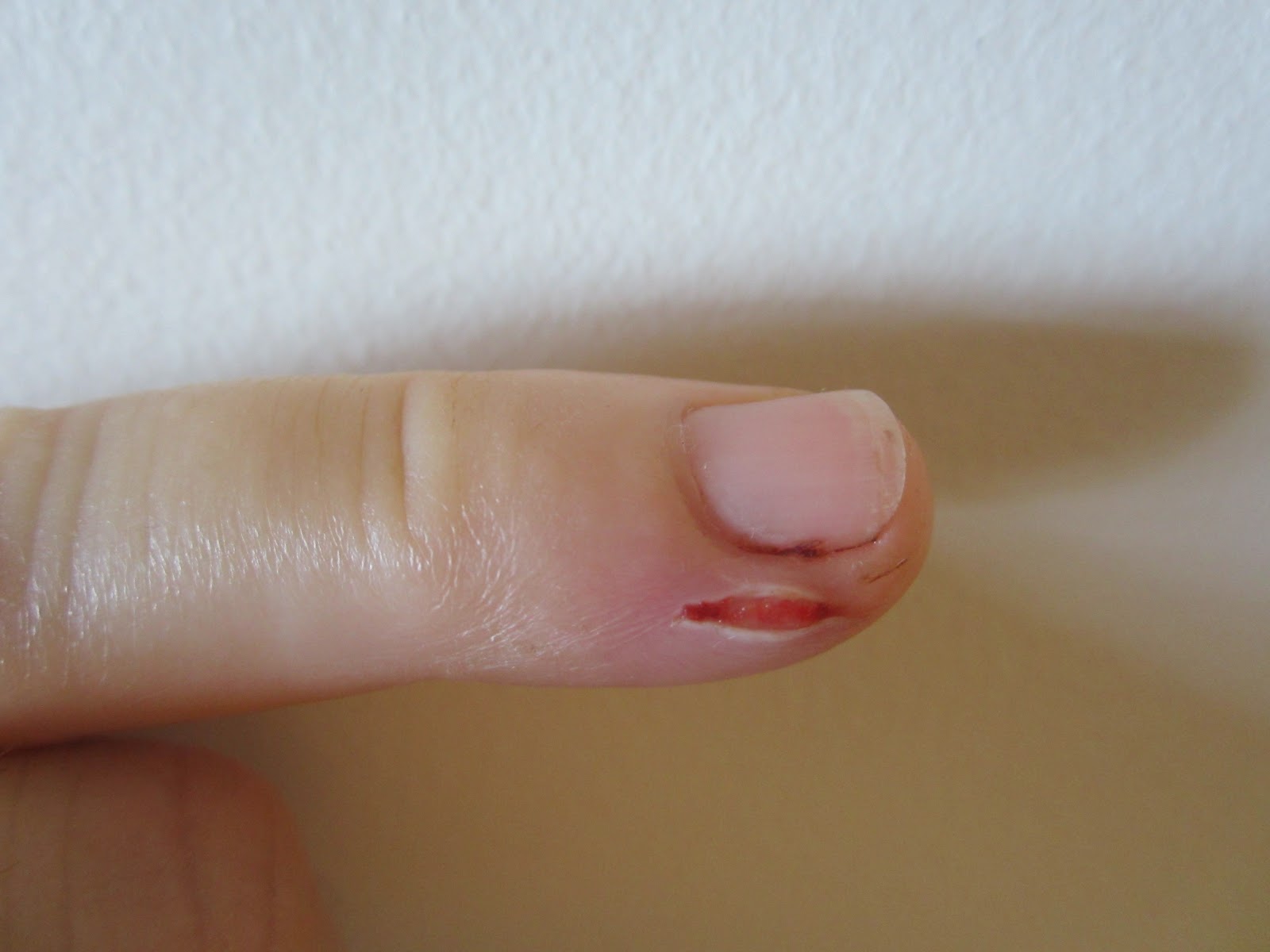
Pinky Finger - left hand
This happened when I slipped with the knife while trimming the pipe to length.  Luckily the blade was brand new, clean & sharp.  I continued the next day, much more carefully!

And the result:


Hope you had a happy Easter!
Ravs

Monday, 2 April 2012

Grinding!

I mastered a new tool on the weekend.
Well, maybe mastered might be a bit of an exaggeration.  But I did overcome my total fear of it - laziness being the driving force.  Using a hacksaw wasn't an option due to access angles and the risk of damaging my knuckles, and a file is slow and puts my teeth on edge.
So what was the tool?

An Angle Grinder!
And why was I using it?

Because I couldn't get screws shorter than 12mm - and they poked out from the 'decorative' wooden corners on my garden bed.  Making them both decorative and dangerous - like cactuses.

What do you think?  SMD says he's happy now, the bed looks more 'finished', though I still have the irrigation pipe top edging to finish.

Bed with 30 x 30 mm corner profile pine.
To fit these corner pieces, which I do admit I like, and make the beds a little safer for kids to run around, I had to unscrew the ends from the bed.  I did this one at a time, rather than disassemble it completely.  Then drill through the sides with clearance holes for the wood screws, hold the corner profile in place, screw, grind the screw ends off, then refit the end piece with the help of SMD to hold it in place.  Then do the same for the other end.

But having solved this design problem for the one bed already constructed - I was able to pre-prepare the pieces for all the other three beds.  Using a production line method to avoid wasting time changing tools continuously.
Drill the holes through multiple sheets of corro at once.  Screw all the corner profiles in place.  Grind the ends off all the screws.  Screw the structural wood supports in place on the end pieces.
And this is what is sitting in my shed as a result.


Sides with decorative corners & ends with structural joiners already in place.
It will now only take a few minutes with an extra pair of hand to put each individual bed together.  But I don't know how long to fit the protective edge on the top yet.

I highly recommend starting with one, almost a prototype, to iron out the bugs, and increase the quality and efficiency of the remaining builds.

A good morning's work.  Thanks to 'Ian Across The Road' (IATR) for the loan of the angle grinder.

And this is some of the soil that is going into the first garden bed.  It is what is left of the straw bale raised no-dig bed that I grew my potatoes in.  Beautiful stuff.  Full of worms, some 6mm or more thick.  Photo doesn't really show how rich & loamy it is though.
A composted down 'no-dig' bed.
I'm still (slowly) working on the second instalment of 'Organic Certification', and reading a couple more books I intend to review.

May your gardens be ever fruitful.
Ravs