Showing posts with label Food. Show all posts

Saturday, 7 July 2012

After a while....

I thought I would give you an update on a couple of things.

Sourdough: A friend asked if I could bring some of the first batch along when I visited her - but I didn't think it would be great after 5 days (and in the end there wasn't any left), so I made my second batch a couple of days earlier than planned.
The first batch was made primarily with Coles brand wholemeal flour.  The second with Biodynamic Wholemeal Wheat Flour by Red Gum Milling.  This second flour was much finer, without all the obvious pieces of bran.  I also tried to handle the dough less between the first & second proof - to retain more of the air as I felt the first batch was a bit dense for my liking (SMD described it as tasting & feeling like a German Rye Bread - fine if that is what you want).  The other change is that the second proof took place overnight in the fridge, so I could bake the bread fresh in the morning.
This is the result:

I forgot to slice the tops - so they are very plain looking.
They turned out a lighter colour inside, and slightly less dense.

I have planted out the seedlings that I showed you in "Inactive - not quite" into the second vegetable garden.  And labelled them using plastic labels cut from a 2 litre milk bottle.  I found that the icy-pole sticks quickly grew mould and became unreadable, hopefully these will work better.


Seedlings newly planted - still in their toilet roll or egg carton homes.
As you can see I set up the automatic watering system at the same time, it's on the same circuit as the other bed, but has small sprays instead of drip lines.  The net cover is essential - when I had it open to work on the watering system Elsa (the Isa Brown) was in digging up the seedlings straight away!

The potatoes in the chicken feed bags are going well.


I have already added some lucerne hay to the bags, and straight after this picture was taken I rolled the sides up a bit and added plenty of soil, filling up the gaps as much as I could, then gave them a good water.

And lastly - the first vege bed is going OK - with its beetroot, carrots & bok choy.


Saturday, 30 June 2012

Sourdough

My favourite sort of bread is sourdough - it just seems to have so much more flavour, texture & body and today I made my first loaves!

I've been meaning to try making a sourdough starter for a while, but you know how it is, I just didn't find one of those round to-its.

Fortunately J5 and I went to stay with some dear friends in Stanthorpe last weekend and, prior to leaving, I was given the generous gift of some of their sourdough starter, which originated in a bakery in Tasmania!

So, on Friday morning before leaving for work I fed it with 100g of wholemeal flour and 100ml of lukewarm water.  Then I fed it again when I got home.  An hour later I removed 200g and put it in a clean glass jar and into the fridge to keep for next time.  This morning this is what the remainder looked like:

Bubble, bubble, toil and trouble.....
1kg wholemeal flour, 600ml lukewarm water and plenty of therapeutic kneading later......

Ready for the first proof.
After a few hours, and a 6yo McDonald's party (which thankfully J5 sent me away from), we had fun punching the dough down and shaping it ready for the second proof - after which it looked like this:


In to bake, closely following instructions, including putting a tray of boiling water in the oven for the first few minutes to form a nice crust.  I enjoyed a couple of glasses of wine and ABC Classic FM while reading my latest Michael Pollen book "The botany of desire" and keeping an eye on the oven temperature (you have to gradually decrease it from 240degC to 180degC over 45 minutes).  The loaves were removed from the oven just as SMD & L8 walked up the stairs after watching our Senior team defeat Mitchelton 5-3, Go ACE!


Of course we all had to try a piece warm from the oven.  Not bad for a first attempt I think.


PS Talking of Michael Pollan, if you live in Sydney he is going to be giving a talk at the Opera House on the 10th July 2012.

Tuesday, 12 June 2012

Inactive? Not Quite

I know, long time, but I haven't been completely idle.
I'm 8 or 9 weeks post spinal surgery today,  I wasn't allowed to do any heavy work for 6 weeks, which explains a bit.  But here's what I have done in the last couple of months.

Garlic (far end), carrots, bok choy & two types of beetroot.  And I finally set the automatic watering up again.

Various vegetable seedlings, two local natives (a westringia & a calistemon) free from the council via the Greenheart Fair, and my Mother's Day Aloe Vera plant.

Repotted the strawberries (see them hanging underneath) with some capsicum & oregano - two pots worth.

Potatoes in chook feed bags - a good use of an otherwise wasted space.

I put two seed potatoes in each bag.  Two different varieties,  3 bags of each.  Hope it works.

Sacrificed the last few passionfruit (was too cold for them to ripen anyway) and chopped the vine right back.  Waiting to see if it resprouts, otherwise I'll plant another in the same area.

A member of the melon family - but which one I don't know.  It is self sown,  so we'll just wait & see how it does, growing between the bricks & the retaining wall!

On a separate issue - I suggested at the P&C meeting that we should try to take the Tuck Shop GM Free.  I was expecting some scepticism - but got overwhelming support!  Very happy.  So now I have another job - as, in order to increase my chances of getting agreement, I offered to do all the research & chasing down of info.  But great news don't you think?

And there is a another book review on the way.  Plus I haven't completely forgotten the Organic Certification reviews (it's pretty dry reading though, so sometimes hard to face, hence the delay).

Oh - and I've joined a 'box scheme'.  We are now getting most of our fruit & vege from Food Connect, which sources all the food from within 3 hours drive of Brisbane (they also operate out of Sydney).  Mostly organic, though not always certified, and usually small farms I believe.  This means we are eating in season, and very fresh & cutting down on food miles.  Have been thrilled with the quality so far.  Am also excited about the chance we get at some point to visit some of the people growing our food.

Anyway, life's pretty good, as I hope it is for you.
Best wishes
Ravs

Friday, 11 May 2012

Genetic Roulette

Book Review
Genetic Roulette: The Documented Health Risks of Genetically Engineered Foods - by Jeffrey M. Smith

 I came across this book totally by chance - it was on display at the end of a row of shelves in our local library.  I picked it up, read the blurb on the back and decided it was something I really wanted to know more about.  Not knowing who Jeffrey M. Smith was, the fact that the foreword was written by Dr Rosemary Stanton, who I've grown up seeing promoting good nutrition, had some influence on my decision.
This is the Australian Edition, other editions are introduced by well known and respected people in their markets where they are sold.

This is not a light-weight book, it is full of scientific analysis, but it has been designed so that it can also be read by people who do not need all the technical data, and there are tips for the "quick scanner" and the "casual reader" on how to read it in the 'About the Author' section.  For example: "Part 1 (two-page spreads): Quick scanners can stick with the executive summary on the left page only.  Casual readers will have to pick and choose among the explanations on the right, since they vary considerably in their level of technical detail."

I came in under the heading 'those wanting it all' - i.e. I read virtually every word.  Partly because I can't help myself and partly because I decided fairly early on that this book was worth reviewing. Consequently it took me about 4 months to read.  Sometimes I went for a few days without reading any, sometimes I only read a few pages.  If you were to read it at the level of the quick scanner it would probably take only a couple of days to get what you want out of it.  This is one of the great things about it - it is accessible to all.

Now, molecular biology is not my field, and I struggle to get my head around genes, DNA, cells, chromosomes, proteins etc, but I do understand scientific method and the design of experiments, and this helped in understanding the details in the points made (i.e. the right hand side of the two-page spreads).  So many of the studies done by the GM developers are poorly designed, or analysed, yet have been used to justify approval for commercial propagation.

To give you some idea of the content - and the main points of the book (all backed by evidence and a 40 page small font list of references) - I will list the section titles from Part 1.

Section 1: Evidence of reactions in animals and humans
Section 2 : Gene insertion disrupts the DNA
Section 3: The protein produced by the inserted gene may create problems
Section 4: The foreign protein may be different than what is intended
Section 5: Transfer of genes to gut bacteria, internal organs, or viruses
Section 6: GM crops may increase environmental toxins and bioaccumulate toxins in the food chain
Section 7: Other types of GM foods carry risks
Section 8: Risks are greater for children and newborns
Connecting the dots: looking for patterns and causes

Trying to think of a few things that will definitely stick in my mind.

  1. Gene insertion is not exact.  It is not like a surgeon inserting a stent into the exact artery of the heart that needs expanding.  It is more like a novice shooting to break in a game of pool, you are unlikely to be able to predict exactly where you are going to hit, or where all the balls are going to end up.  The gene you are trying to insert may get broken up, or it may land in the middle of other gene sequences, disrupting their operation.
  2. Even if the inserted gene sequence remains intact it may produce different proteins to that desired, or the desired protein differently folded, and this can change the effect.
  3. The new proteins will be produced in every cell of the organism, so they can't be avoided by only using one part.  For example "Bacillus thuringiensis (Bt) is a soil bacterium that produces a pesticide" (Section 3.3 p95). "Bt spray is applied in organic agriculture only during high insect infestation emergencies. It is applied on the plant's surface and the concentration of the toxin quickly dissipates. .... it is broken down within a few days to two weeks upon exposure to UV light from the sun. "It is also degraded rapidly by high temperatures and substances on plants' leaves.  It is also washed from leaves into the soil by rainfall" or can be washed off by consumers" (Section 3.4 p97).  "A Bt crop, however, makes the toxin in every cell on a continuous basis.  The concentration does not dissipate by the weather and it cannot be washed off." (Section 3.4p97)
  4. Most genetically modified crops have an antibiotic resistant marker (used to determine if the gene has been successfully inserted).  Should this transfer across to gut bacteria during digestion, and evidence suggests that the genes can, though it is uncommon, it could convey antibiotic resistance to them, giving them a survival advantage and resulting in severe infections.  The more GM food eaten the greater the chance that this will occur.
  5. GM crops have been given a survival advantage and can easily become weeds.
  6. Even if a GM crop is not intended for human consumption, should it be fed to animals it can still get through into our food.
  7. GM crops have contaminated other crops.  It is extremely difficult to then get rid of.
  8. GM crops are patented and the farmers are not permitted to seed-save (even assuming they crops bred true-to-type), they have to buy new seed each year.
  9. 'Round-up Ready' and similar herbicide resistant crops are designed to survive spraying by the accompanying chemical, while everything else is killed.  This actually results in more herbicide being used.  Some of the weeds are consequently already developing resistance to the herbicide as well and new generation GM crops are being developed which can survive yet stronger herbicides - all this going into our soil, water, air and food supply (and creating super-weeds).
  10. GM food will not 'solve the problem of world hunger'. We already produce more than enough food to feed the world, the problem is that many people can not afford it.  Vitamin A enriched GM rice (golden rice, one of the very few crops being developed for a nutritional benefit, though more likely it is purely a public relations exercise) will not solve the problems of Vitamin A deficiency in the areas where it is a problem.  A 2yo child would need to eat over 3kgs of rice a day to get enough Vitamin A this way.  In addition the body cannot convert beta-carotene to Vitamin A when severely malnourished.  Much cheaper, simpler & healthier alternatives exist.  Michael Pollan (In Defence of Food, The Omnivore's Dilemma) suggests, in his New York Times Magazine article, The Great Yellow Hype, teaching "people how to grow green vegetables [that are rich in vitamin A and other nutrients] on the margins of their rice fields, and maybe even give them the seeds to do so".  Another alternative, already being done, is to hand out high potency Vitamin A tablets, strong enough that only 2 are required per year to prevent blindness, at a cost of 5 cents a tablet.
  11. I am far from a conspiracy theorist - but how much influence do Monsanto, Syngenta and the like have over our regulatory bodies, politicians and scientific community?  There are many examples in this book of scientists being bullied, losing their jobs or funding, or being prevented from studying the organisms in question.  When reading this type of thing I always ask myself "What does this person / organisation have to gain by promoting their side of the argument?"  And the GM companies have everything to gain (up to the possibility of control of a large portion of the world's food supply and never-ending and increasing sales of their herbicides), while the scientists putting the alternative research have nothing of major significance to gain.  I have great difficulty understanding people who put profit and their own benefit above the long term survival of our community.  For me it is like trying to understand why someone would break a bottle on the rocks at the beach where they have just enjoyed a picnic, or at the extreme end, Martin Bryant and the Port Arthur Massacre.  How can they think like that?  What is wrong with the wiring of their brains?  (Of course they might think exactly the same of me "Why should she care?")
Is that enough do you think?  The evidence presented is certainly enough to convince me to start avoiding GM food.  I am thinking of proposing that our school tuckshop endeavour to go GM free too (and doing the research to help them achieve it).  In Australia we have a much lower proportion of GM food than in the US, but probably more than the EU, and it is hard to be sure about any imported food, seeing as labelling is not required here.  As of the publication date of this book (2007) 89% of soy, 75% of canola and 60% of corn grown in the USA was estimated to be genetically modified.

In the Appendix there are sections about how to stay up-to-date in the risks of GM food (try the Genetic Roulette site and http://www.responsibletechnology.org/), How to avoid eating genetically modified foods (two ideas, go Organic or use shopping guides, an Australian one can be found at http://www.truefood.org.au/), A list of GM crops, Food enzymes from GM organisms and a special alert on aspartame (e.g. Nutrasweet, Equal etc).

If you believe that GM foods are a bad idea, and that crops shouldn't be grown in this country, there are many ways you can have an influence, starting by trying to only buy products you know are GM free. Campaigning for compulsory labelling of GM content in food would be good too.  Then there is encouraging your local members, environment and agriculture ministers to learn about it, and get them to campaign so that our food regulatory body FSANZ (Food Standards Australia and New Zealand) demands proper research and full disclosure before approving crops, or imports, and that all test crops are grown in sealed greenhouses so no contamination can occur.  It would also be good if legislation were enacted such that the GM companies were held responsible every time contamination of other crops did occur.  The list could go on...and more ideas for creating a 'tipping point' can be found at the Institute for Responsible Technology, including an Action Tool Kit!

Anyway - if you want to know more read the book.  It is well written and you don't have to read every word like I did to get a lot of benefit.


Saturday, 28 April 2012

Fight for the Future


It is easy when reading about climate change and peak oil to get into a panic.  Easy, but not useful.  So whenever I start feeling this way I try to step back and think about what positive steps I can take to mitigate the situation, remembering that I am only one person with an individual set of skills, resources and emotional energy.  Nobody can do everything.

So, here are some ideas, in no particular order.  Some are things to help my individual family, some are about my local community, and some are concerned with the wider national & world community.  Some are things I am already doing, some are ones that I am considering & others are ideas for the future.  I think these are important issues because I believe we are going to see significant effects, if not within my lifetime, certainly within that of my children.

Tuesday, 10 April 2012

Easter in the Garden

We stayed home for Easter - so I was able to get out in the garden for a couple of hours each morning while it was still cool.

I worked pretty hard because after today I won't be able to do any heaving lifting for a few weeks - spinal fusion at C6/7 etc.

Just before the weekend I received a box of plants from the Diggers Club, comprising: 2 x Natal Plum, Acerola Cherry, Stevia (sugar plant) a sugar replacement, Yacon, Comfrey, Dwarf Apple Tropical Beauty and some seeds.  All edible, and the plum, cherry & apple specifically suited to our climate in Brisbane.

Natal Plums
Supposedly the Natal Plums make a nice hedge, so I have planted them against the fence where they will get plenty of sun.  Because the soil is pretty poor in this spot I broke it up with a mattock, then inverted an old pot with the base cut of over the spot and filled this with good quality soil and compost.  The cherries are planted in this.  The idea being that they will get a good start before their roots hit the poorer, harder, clay soil beneath (and the worms will have time to work on this too).

I got all the others planted at all (no heavy digging soon remember).

I also constructed the second raised bed.  After leveling the site (just where the edges would sit, not the whole area) it took 5 minutes at most to put together with the help of SMD.  Thanks to all that preliminary work I did last week.

Then I had to put the protective edge (split irrigation pipe) along the top.  It was so much easier this time with a brand new hooked blade in a proper Stanley Knife!  However, care is recommended.

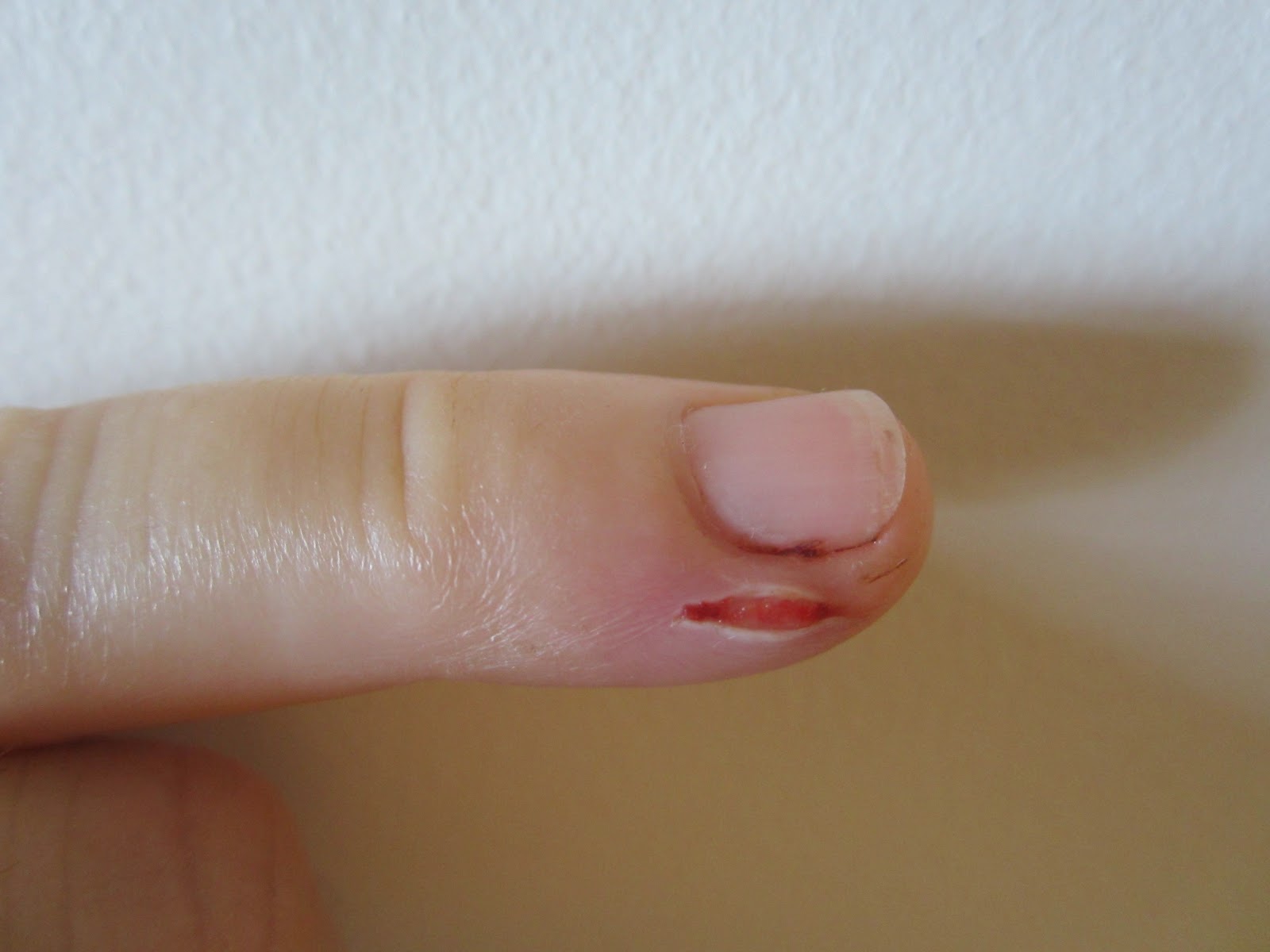
Pinky Finger - left hand
This happened when I slipped with the knife while trimming the pipe to length.  Luckily the blade was brand new, clean & sharp.  I continued the next day, much more carefully!

And the result:


Hope you had a happy Easter!
Ravs

Wednesday, 15 February 2012

Pineapple

Remember those pineapples we had growing?
Well one was well and truly ready to pick the other day.

The same day we bought ourselves a juicer, and SMD was going to use this in his first experiment!
We were all thankful that I stopped him, as it was probably the most delicious pineapple we have ever eaten.  A pale buttery yellow it was sweet but smooth, a 'rounder' flavour than the shop bought ones, not as acidic.
I think it was due to two things - being left to fully ripen in the sun, on the plant, and being devoured within a few hours of being picked.
They take a while to grow & produce fruit, but they are well worth planting (and easy, just sit the top of your pineapple on the soil & let it go).  They can be quite decorative too.
Yum!
Ravs.

Saturday, 4 February 2012

Organic Certification in Australia - for Beginners

In my last post I said I was going to investigate what 'organic' meant in Australia - so that I could make more informed decisions regarding (primarily) my food purchases.  This was especially motivated by learning, through "The Ominvore's Dilemma"  that 'organic' chicken, pork and beef might not necessarily be what the layman thinks it is.  I.e.  meat from animals that have not only been feed chemical free food, but food appropriate to their evolutionary preference (eg grass for cows) in situations that as closely as possible mimic their natural environments.  For example, somewhere quiet to lay eggs, room to scratch & forage, social interaction etc.  At least in the USA this doesn't appear to be the case - the organic label seeming to be determined more on not using chemicals or antibiotics, and ensuring the feed is also organic, but cows could still be fed corn in feed lots rather than grass in paddocks, pigs confined inside for the majority of their lives, and chickens raised in crowded barns - withhe h only nominal access to the outside.
So, as promised, I have started looking into it.


Saturday, 28 January 2012

Dilemma

Specifically "The Omnivore's Dilemma" by Michael Pollan.
I finished reading this book last night, it kept me really engaged the whole way through.

It really does make you think differently, and more deeply about what you eat.
Michael Pollen follows three food chains, Industrial, Pastoral, and Hunter/Gatherer from their start to the end product, a meal.  In the process showing us the hidden side of the food we eat today, and the drivers behind the processed food industry.
His descriptions of the symbiotic and intertwined relationships between the grass, cows, chickens, turkeys and pigs on Polyface Farm are fascinating.
What is the best way to eat?  For ourselves? For the planet? Is organic necessarily the best way to go? Or is local more important?  What about animal rights?  Do we look at the individual or the species?
Well researched and argued, giving both sides, it is still understandable to the layman and very engaging.
Now I need to do some more research myself - as some rules & regulations are bound to be different in Australia from the USA (eg Organic standards, which are not federally legislated here) and therefore might swing the arguments in slightly different ways.
If you are really interested in what you are eating, why you are eating it, and what the consequences are - read this book.  It is going to become a permanent part of my library!

Wednesday, 21 December 2011

In Defence of Food

Book Review

idof-3
In Defence of Food - The Myth of Nutrition and the Pleasures of Eating. By Michael Pollan.

While discussing Coal Seam Gas, Organic Farming, Biofuels and Peak Oil with friends over a few glasses of wine, the book "The Omnivore's Dilemma" by Michael Pollen was recommended to me, and this one was mentioned as being good too. So when I searched the BCC Library catalogue I put a hold on both of them.

This one arrived first.

Brilliant! It sums itself up in 7 words in the introduction "Eat food. Not too much. Mostly plants."

The book then proceeds to define 'food' (nothing that your great grandmother wouldn't recognise is one) and eliminate all that confusion that has been created by the science of nutrition.
The explanations of the history of nutrition science, 'nutritionism' and government health recommendations (USA but we can relate to some here in Aus too) are fantastic, as is the explanation of the limitations of the science itself.
The book is easy to read and engaging, but not 'dumbed down'.

This could cure you of 'dieting' for life, and certainly points out how unlikely any of the fad diets are to make you healthy, or even help you lose weight in the long term.

Yet another (very cohesive) argument for going organic, mixed farms, and 'slow food' - or at least cooking most of your meals from scratch and eating at the table with your family.  Though that isn't its purpose.

A 21 page list of resources (by chapter) and a 12 page index make it a book to refer back to, or lead you on to further reading.

Invest a couple of hours.  Borrow it. Read it.

Highly recommended.

PS The picture is of the American edition of the book - hence the different spelling of the title.